.png)
The First-Timer's Guide to Bangkok
Most people give Bangkok one night. They land, sleep in a generic tower somewhere near the airport, rush through a temple or two, and catch the morning flight to Phuket or Krabi. Then they wonder why the city never clicked. This is how to actually experience the city instead of passing through it
thailand

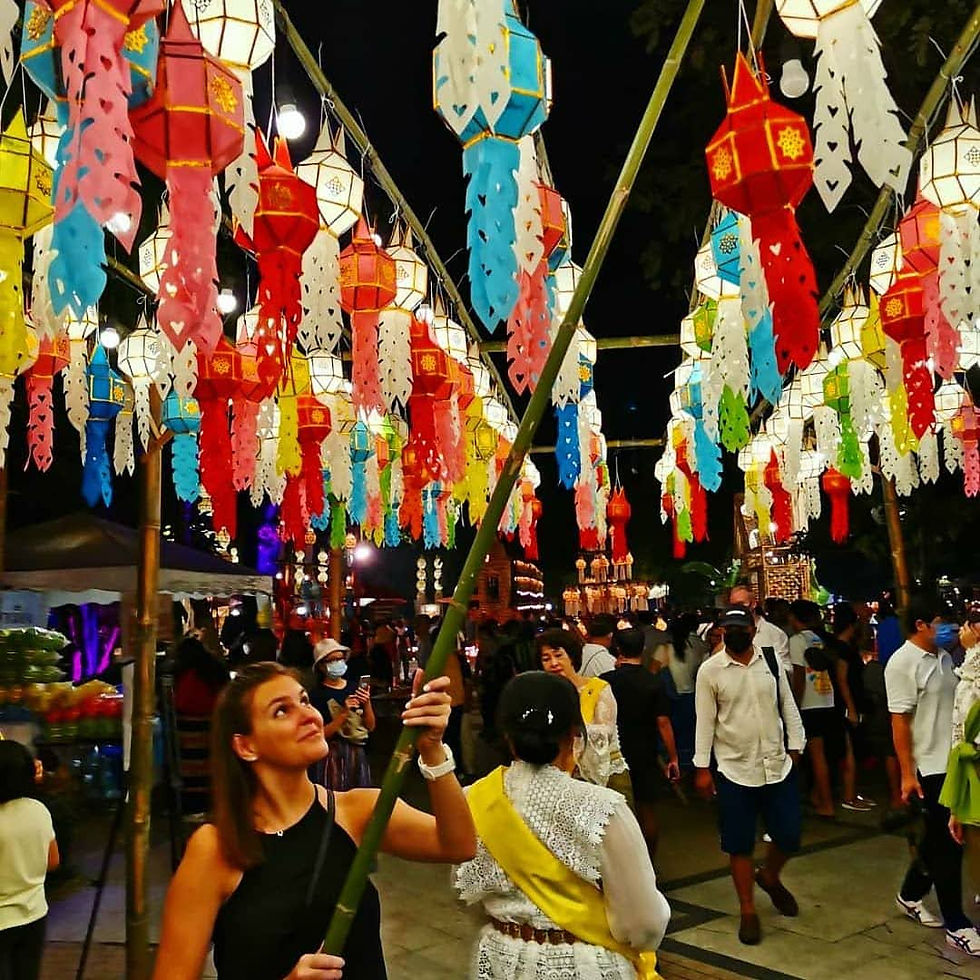
Here's the truth after years of living in Thailand.
The one thing everything gets wrong is that Bangkok isn't a city you conquer with a checklist. It's a city you settle into. Give it three or four nights, get the fundamentals right, and it becomes one of the most rewarding places to travel in Asia—layered, delicious, chaotic in the best way, and full of experiences most visitors never see.
This is the guide I wish every first-timer had before they booked. It walks through the five decisions that shape your entire trip—where you stay, how long you stay, how you get around, how you eat, and how you spend your days—so you skip the mistakes and go straight to the good part.
1. Choosing Where To Stay
Bangkok is enormous, and where you base yourself shapes everything—your commute, your dinners, your late nights, the version of the city you actually meet. There's no single "best" area. There's the best area for the trip you want.
My advice for a first trip: stay in Sukhumvit or on the Riverside, and spend at least one evening exploring Ari and Chinatown so you see both sides of the city.
Sukhumvit
If it's your first time, this is the safe default. Sukhumvit runs along the BTS Skytrain, so you can get almost anywhere without traffic. You'll find world-class hotels at every price point, endless dining, and nightlife on tap. The trade-off is that it's the most polished, international slice of the city—less "Thailand," more "global metropolis." For a first visit, that convenience is often worth it.

Riverside
The stretch along the Chao Phraya River is where Bangkok feels cinematic. This is home to the legendary grand hotels—The Mandarin Oriental, The Peninsula, Capella—and it puts you within a short boat ride of the old city temples and Chinatown. Slower and more romantic than Sukhumvit, with the river as your highway. My pick if you want atmosphere over convenience.

Yaowarat / Phra Nakhon
Gritty, historic, and electric after dark, Phra Nakhon and neighboring Yaowarat offer the best eating in the city and are increasingly home to characterful boutique stays and hidden cocktail bars. The location can be less convenient for exploring some city sights, but if food, temples and historic neighborhoods are why you travel, there's an argument for basing yourself right in it.

Ari
Leafy, low-rise, and full of specialty cafés, wine bars, and neighborhood restaurants, Ari is where locals spend their weekends. Barely any tourists, genuinely cool, and only a few BTS stops from the center. Choose this if you've been to Bangkok before—or if you want to feel like you live there rather than visit.

Silom / Sathorn
Buzzing on weekdays, quieter on weekends, and home to some of the city's most famous rooftop bars. Good value, well-connected by both the BTS and MRT, and walkable to Lumpini Park. A smart middle ground. This is a spot I rarely recommend.


2. Give it more than one night.
This is the mistake I see most, and the most costly. Bangkok gets treated as a layover before the beaches—and one rushed night is exactly why it disappoints people.
Stay for 3-4 nights.
If it's your first time, this is the safe default. Sukhumvit runs along the BTS Skytrain, so you can get almost anywhere without traffic. You'll find world-class hotels at every price point, endless dining, and nightlife on tap. The trade-off is that it's the most polished, international slice of the city—less "Thailand," more "global metropolis." For a first visit, that convenience is often worth it.
Leave time to explore.
The stretch along the Chao Phraya River is where Bangkok feels cinematic. This is home to the legendary grand hotels—The Mandarin Oriental, The Peninsula, Capella—and it puts you within a short boat ride of the old city temples and Chinatown. Slower and more romantic than Sukhumvit, with the river as your highway. My pick if you want atmosphere over convenience.
Book a tour.
Getting to really know Bangkok in a few days is nearly impossible. One of the best ways to really feel the city is to join a local expert on a day tour.
Click here for my favorite: Bangkok day tours
3. Get around like you live here.
The single best thing you can do for your sanity is understand that Bangkok has excellent transit—and traffic that will otherwise eat your day alive.
BTS Skytrain + MRT
Fast, cheap, air-conditioned, and above the gridlock. The trains are comfortable and exceptionally clean. The routes will cover most of where you'll want to go. Learn the two or three stations near your hotel and you're set.

Taxis & Grab App
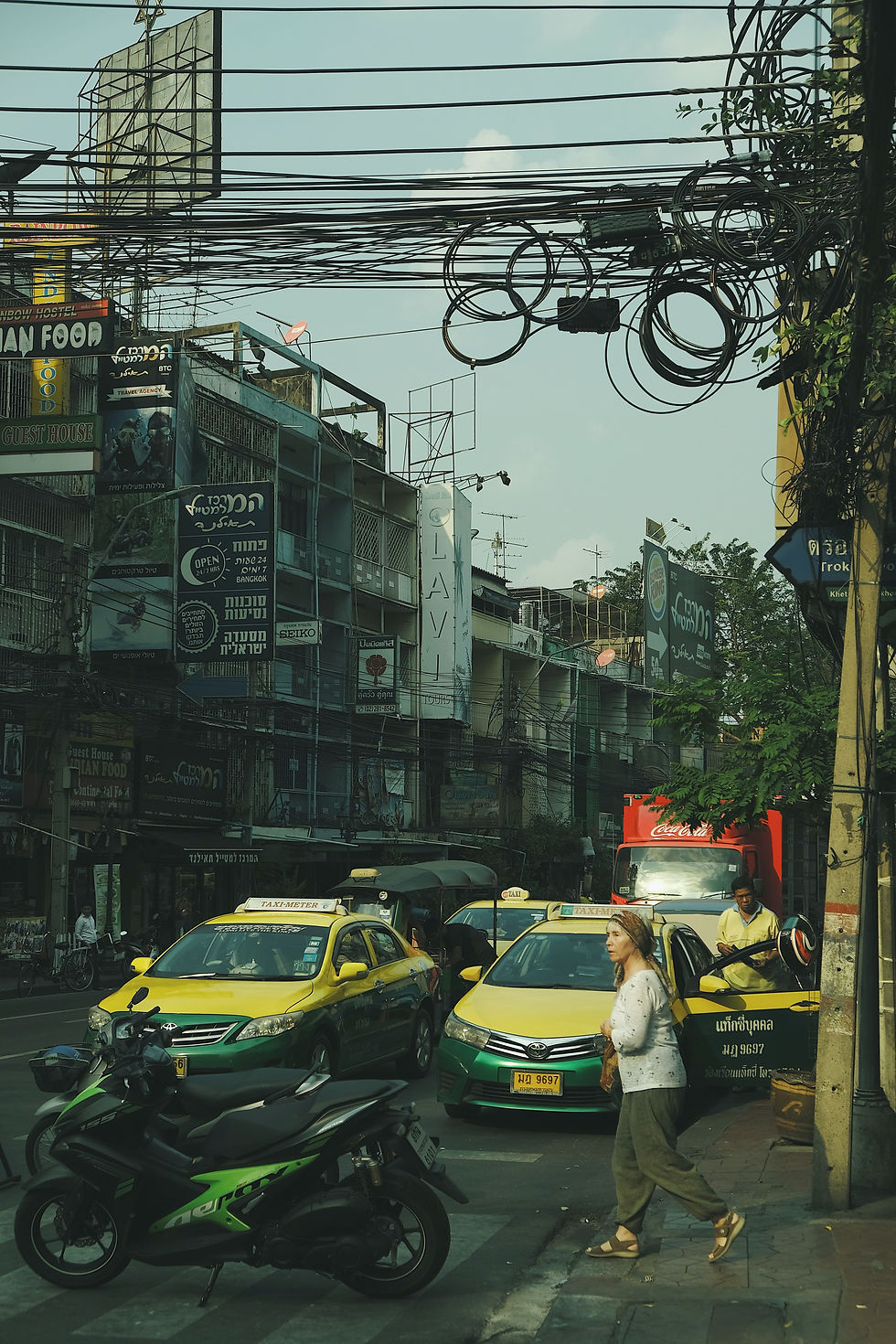
Download the Grab app before you arrive and use it whenever the trains don't reach. Fixed pricing, no negotiation, no "the meter's broken" conversation, and a driver who can navigate to a pin instead of a landmark you can't pronounce. This is non-negotiable.
Boats & Ferries
The river is a working highway. and the Chao Phraya Express Boat and cross-river ferries give you a real taste of traveling like a local. Use the orange-flag express boat to reach the old city temples—it's scenic, quick, and costs almost nothing.

Tuk Tuks
Fun for a short, novelty ride. Agree the price first, and ignore any driver who insists on a "special stop" at a gem shop or tailor—that's a commission scam, not a shortcut.

Motorbike Taxi
Riding on the back of a motorbike is the ultimate Bangkok like a local experience. You can hail a driver with an orange shirt where there are groups of drivers or order one on Grab.


4. Eat where the locals eat.
Some of the best meals of your life are waiting in Bangkok, and almost none of them are in the restaurants clustered around the major attractions. The rule is simple: the further you get from the sights, the better and cheaper the food gets.
If you only remember one thing: skip the restaurant with only tourists and eat wherever there's a line of Thai people.
Go to Yaowarat.
(Chinatown) after dark is the city's greatest open-air kitchen—grilled seafood, guay jub, oyster omelettes, and mango sticky rice from stalls that have run for generations. Come hungry and graze.
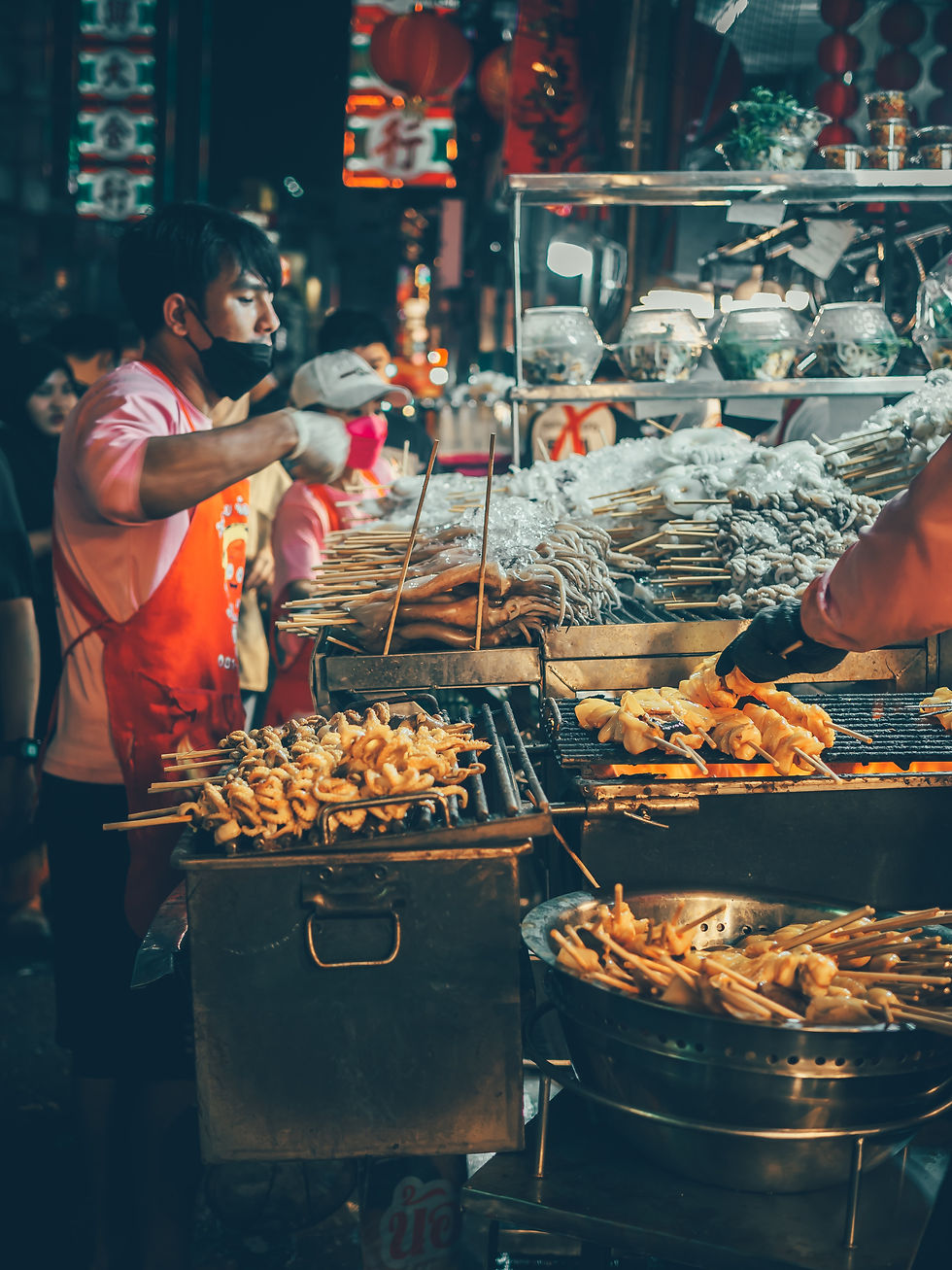
Eat street food.
Some of the best meals you'll have in Bangkok won't come with reservations, dress codes, or white tablecloths.
They'll come with tiny plastic stools with no menu. For the safest bet, choose vendors that are the busiest.

Book a tour.
The best way to experience the food in a short aount of time is on a food tour. Here are my favorite tours in Bangkok. Bangkok food tours
5. Spend your days with a rhythm, not a checklist.
Bangkok is best when you anchor each day around one neighborhood and let the rest unfold. Here's a rhythm that works for a first visit.
Old City & Temples
Start early—by 8 a.m.—at the Grand Palace and Wat Phra Kaew to beat the heat and the crowds (shoulders and knees covered; they enforce it). Walk to the Reclining Buddha at Wat Pho, then take the short ferry across to Wat Arun, which is loveliest in late-afternoon light. Cap the day at the Golden Mount (Wat Saket) for a sunset view over the rooftops.

Markets & Night Out
Spend a morning at Chatuchak Weekend Market—thousands of stalls, endless people-watching—then recover over lunch at Or Tor Kor next door. As the sun drops, go up. Bangkok's rooftop bars are a genuine rite of passage: the Sky Bar at Lebua, Vertigo and Moon Bar at Banyan Tree, or Octave over in Thonglor. Dress code applies, so leave the flip-flops at the hotel.

Space to wonder.
Give one full day to wandering with no agenda. Ari for cafés and low-key restaurants, Talat Noi for old Chinatown shophouses and street art, or the Charoen Krung Creative District for galleries, coffee, and river views. This is the day people remember most.

GET IN TOUCH
STAY CONNECTED
Get the latest news & updates
© 2026 by The Borderless Travel Co. LLC. All rights reserved.